Horse facts
What do you get when a male donkey and female horse breed? Do wild horses actually exist? All your horse questions are answered here!
14 horse facts
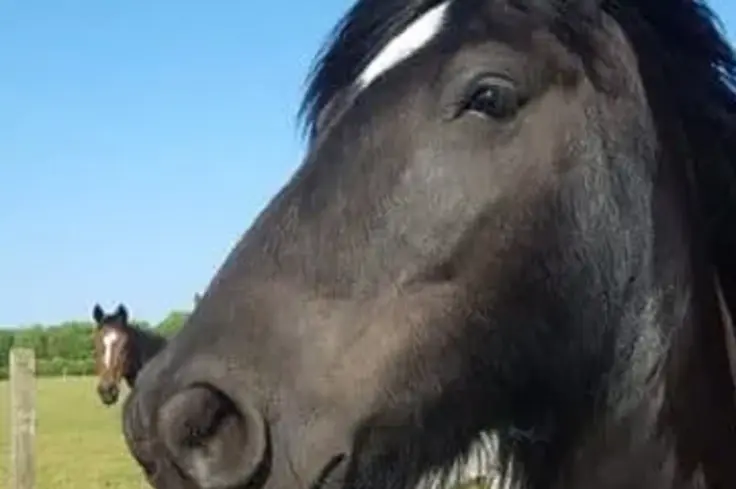
1. Some horses can grow moustaches!
The moustache in this photo might seem like it was bought at a fancy dress shop, but it's actually real - yes, some horses really do grow fancy moustaches! They are most commonly seen on Gypsy Vanner horses (also known as Irish Cob and Tinker Horse), but some Shire horses and other breeds are known to grow them, especially in old age. The 'taches vary greatly in size and style, from the neat Hercule Poirot-like one pictured here to more bushy growths that bring to mind the philosopher and noted horse-lover Friedrich Nietzsche.
Why? is inevitably the next question. One theory is that it helps the horses feel and differentiate between types of grass. It allows them to graze easier in poor light and conditions, and this explains why it is more commonly seen in native horse breeds that have to scratch about to find the best grass.
As is the case with some human moustache growers, many horses will grow them in winter and shed them in summer.
Image: Alfie, owned by Joanne Priestley
2. Horses can sleep both standing up and lying down
In evolutionary terms horses spent their formative years on the open plains. They are prey animals, rather than predators, and as a result they developed behaviours that allow them to stay as alert as possible to the dangers around them. This includes the ability to sleep while standing up.
How do they do this? They have an adaptation feature called the 'stay apparatus' which allows them to completely relax and sleep standing up. This is made up of series of tendons and ligaments that connect the stifle to the hock and lock them in place. This also allows them to lock three legs in place to take all the weight, while the fourth legs rests. And at the first sign of danger the horse can unlock the position and make a bolt for safety.
However, you will sometimes see horses sleeping lying down, as they still need short periods of time to achieve deep sleep and complete their sleep cycle. They can't lie down for too long however, as that would put undue strain on their bones and internal organs.
3. A horse called Old Billy reached the equivalent of 165 in human years!
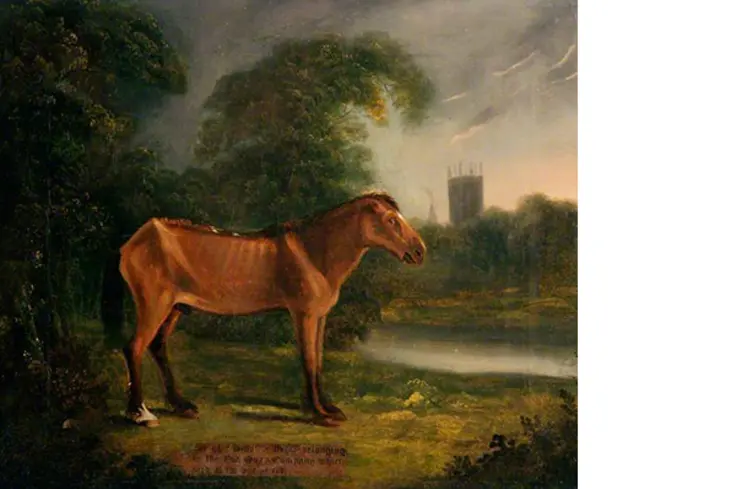
The record for the oldest horse in history is held by an 18th century barge horse from Woolston, Lancashire, UK. Old Billy, as he was known, reached the age of 62 when he died in 1822, which is quite something when you consider the average lifespan of a horse is between 20 and 25 years!
He had a long working life too - bought by the Mersey and Irwell Navigation company at two or three years of age, he was employed as a gin horse and in towing boats until 1819, when he was retired to a farm on the estate of one of the directors of the company, William Earle of Everton. Here on the farm at Latchford, near Warrington, Old Billy lived out the last three years of his life in ease until he died on 27th November 1822.
Image: 'Old Billy' painting by W. Taylor, courtesy of Warrington Museum & Art Gallery (Culture Warrington)
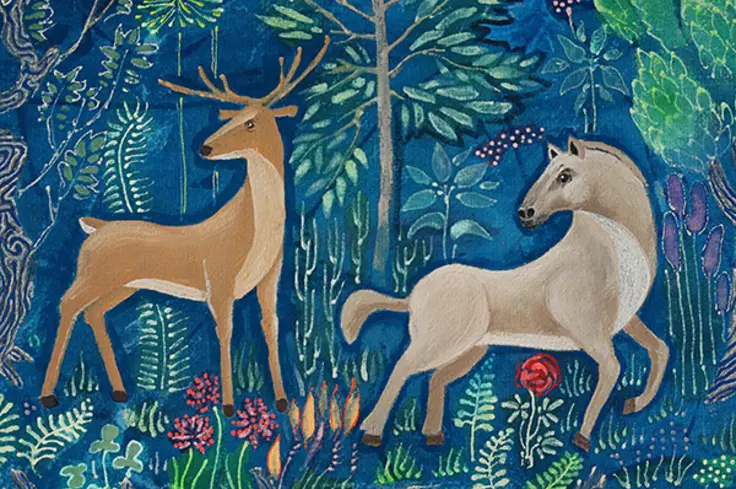
4. Horses are more closely related to rhinos than to deer
If you look at the branches of the evolutionary family tree you might be surprised to find snuggled together on one branch these unlikely bedfellows: rhinos, tapirs and equines (horses, zebras, and donkeys). Meanwhile deer are placed on a very different branch, along with cows, goats, sheep, giraffes and bison.
The reason for this relates to the number of toes they have. The exclusive club of odd-toed ungulates features just rhinos, tapirs and equines, while even-toed ungulates as an evolutionary group are much more diverse, with pigs, hippopotamuses, antelopes, deer, giraffes, camels, llamas and alpacas among their number. The difference between the two groups carries through to their digestion methods too, with even-toed ungulates digesting plants in one or more stomach chambers rather than in their intestine as the odd-toed ungulates do.
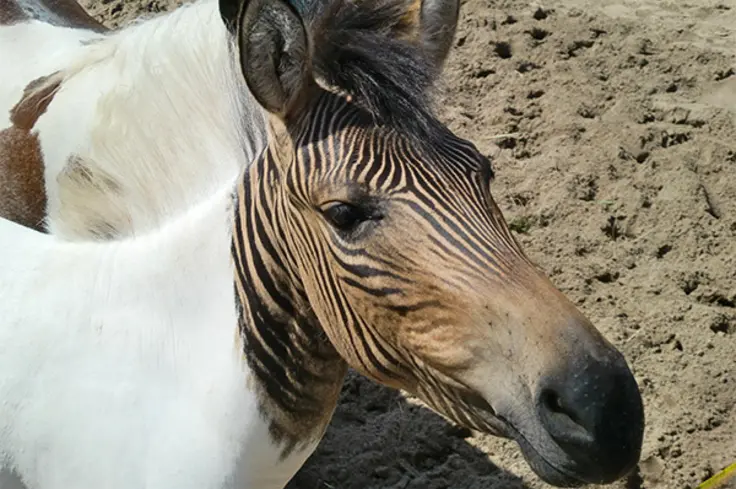
5. Horse or Zebra?
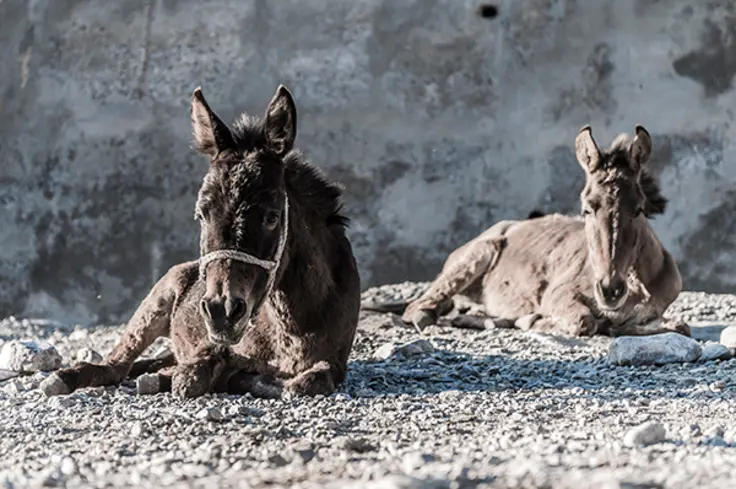
It's worth pointing out that as close evolutionary relatives horses and zebras are able to breed, though their offspring are always sterile.
The names of these crossbreeds are wonderful in themselves: the zorse has a zebra father and a horse mother, the zebra mule has a horse father and a zebra mother - but are very rare!
Image credit: Christine Schmitt
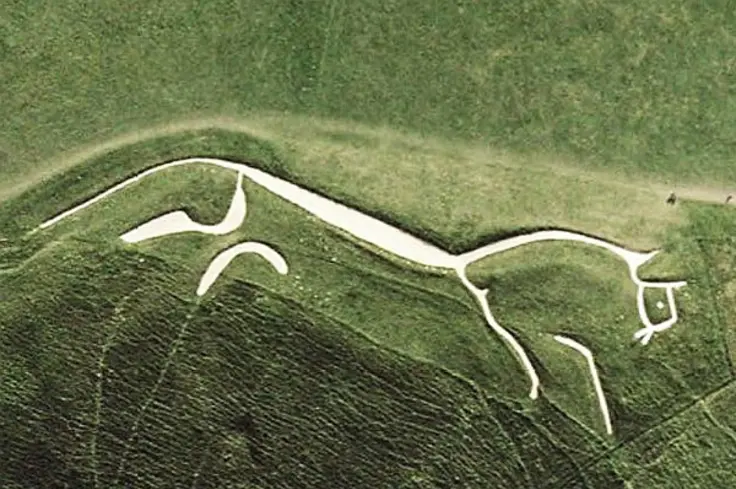
6. No one has ever seen an albino horse
The figure of the white horse often pops up in myths and prehistoric artefacts, from the white winged horse Pegasus of Greek mythology to the mysterious Uffington White Horse carved into the Oxfordshire countryside. You could be forgiven for thinking the origin of these mythic horses might be traced back to albinism, as rare albino animals were often revered by early humans. You would be mistaken however, as strictly speaking there is no such thing as an albino horse, or to be more precise, there are no documented reports of true albinism in the species.
Albino mammals, such as mice or rabbits, typically have a white hair coat, unpigmented skin and reddish eyes, whereas white horses that are mistaken for albinos have pigmented eyes, usually brown or blue. Also, white horses’ lack of colour is caused by the absence of pigment cells (melanocytes), whereas albino animals have a normal distribution of melanocytes.
If you spot a white horse it is likely to be a Dominant White or Sabino-white, both of which have pink skin that needs protecting from sunburn. There are also some Grey and Cremello horses that can appear to be white but are actually just very pale in their pigment.
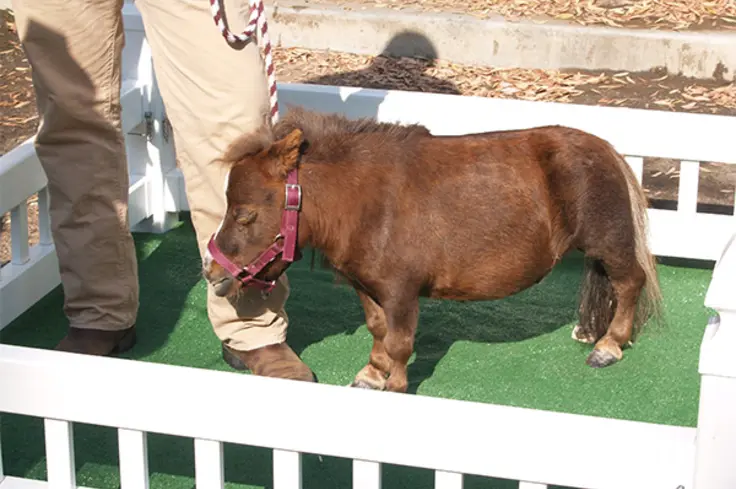
7. The smallest horse on record stood at a tiny 44.5cm tall
Thumbelina (2001-2018) was the world's smallest horse - at her tallest she was around the same height as a bulldog. A miniature sorrel brown mare, she was born with dwarfism at Goose Creek Farm in St Louis, Missouri, USA.
After noticing that she was good around children, Thumbelina's owners realised she would make a good therapy animal. They converted a used recreational vehicle, christened it the 'Thumbymobile', and drove across the USA, stopping at children’s hospitals, schools, camps, and shelters for abused women and children. Over more than two years Thumbelina interacted with children at over 300 stops.
She retired from the touring life at 13 years of age and spent the rest of her days meandering around her owners' farm, easily ambling under gates and through fencing.
The shortest donkey on record is actually quite a bit taller than the shortest horse. KneeHi, a miniature Mediterranean donkey, measures 64.2 cm to the top of the withers, a good 20cm taller than Thumbelina.
8. The all-time tallest horse was a Shire called Sampson
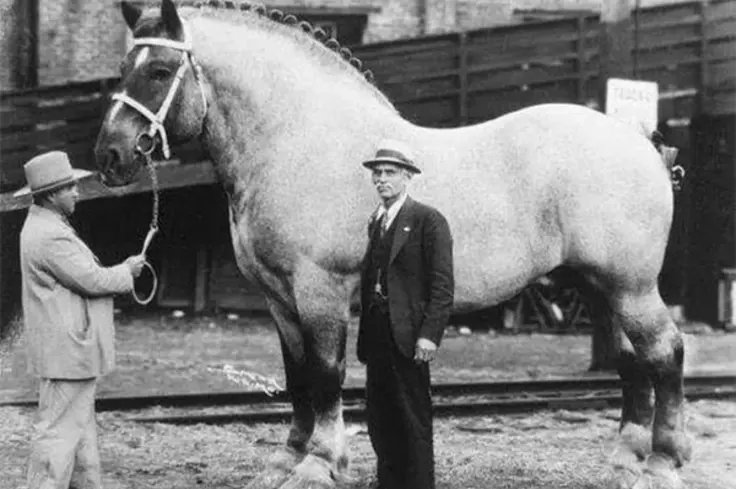
Sampson was born in 1846 in Bedfordshire, UK, and at maturity he stood at a towering 21.2 hands (2.15m, or over seven feet). In fact he holds the record as both the tallest and heaviest horse, weighing in at 1,524kg.
The record has yet to be surpassed - the most recent contender being Belgian Draft gelding called Big Jake, who measured a mere 20.2 hands.
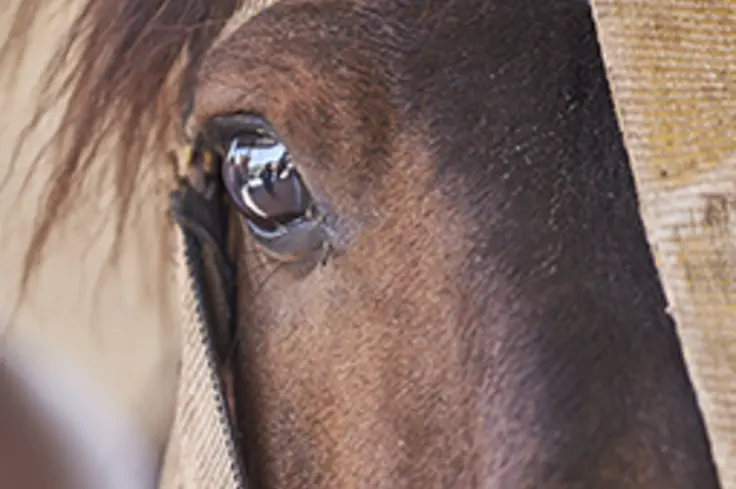
9. Their eyes are very large
Horses have one of the largest eyes in the animal kingdom. Equine eyes are widely spaced apart, giving them high-quality peripheral vision with a nearly 360° view of their surroundings. (Our 360° brick kiln video is about the closest we humans can come to experiencing this!)
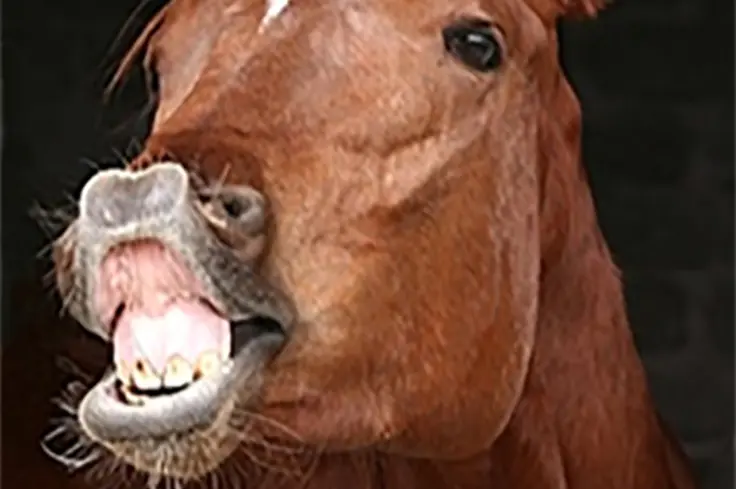
10. No laughing matter
When horses curl their upper lips and look like they’re laughing, they’re actually engaging in a special behaviour known as flehmen to determine whether a smell is good or bad.
Bonus fact: their teeth take up more space in their head than their brain does!
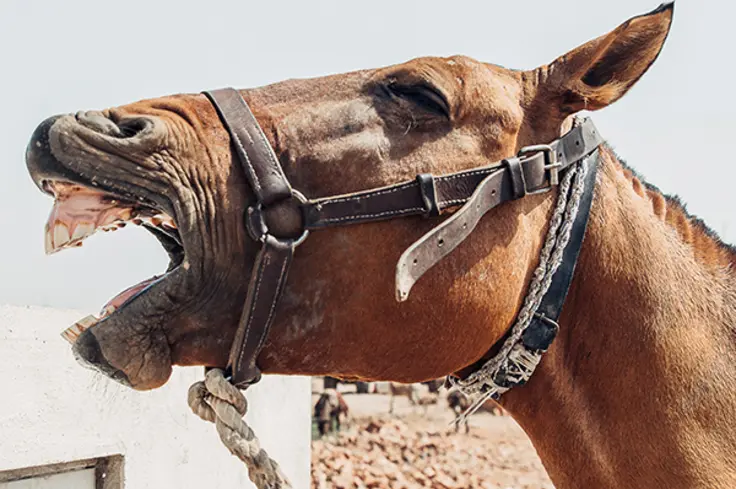
11. You'll never see a horse throw up
Unlike most animal species, horses, donkeys and mules cannot vomit.
The main reason they can't is due to the strength of their lower esophageal sphincter - it means that the valve that usually allows food to go back the way it went in is so tight that it's almost impossible to open with internal stomach pressure.
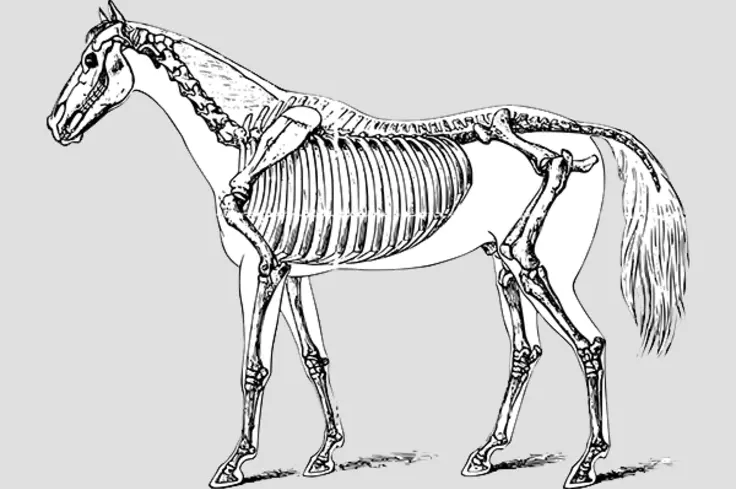
12. Horse and humans have nearly the same number of bones
Humans have 206 bones, while horses have just one less at 205.
13. A sixth sense?
In a study from 2017, researchers found that horses experienced higher stress levels when being stroked by someone who felt negatively about them, than by someone who liked horses.

14. They remember kindness
Horses remembered how an individual human behaved towards them based on just one interaction, even as long as eight months later, and behaved better with handlers who used positive handling techniques, such as stroking or speaking in a soft voice.
Horse characteristics
- Fastest and easiest to train. Because of this, they have been used throughout history in times of war.
- Prefer to travel in groups.
- Horses have smaller ears than mules and donkeys.
- Their heads are generally in proportion with the rest of their bodies.
- They have long flowing tail hair right from the base of their tail.
- Their manes generally flop to the side, and their necks are longer than donkeys’ and mules’.
- The average lifespan of a healthy, domesticated horse is 25-30 years. Working horses are less likely to live this long. Find out more about Brooke's aim to improve the welfare of working horses.
- Globally there are over 350 breeds of horse and they can range in height from less than 1m tall (miniature Shetlands) to nearly 2m tall (Shire horses).

A word about 'wild horses'
Many of us think of horse populations such as those that roam freely in the New Forest or the Camargue area of southern France as 'wild', but the right word for these is actually 'feral'. Wild horses are those that have never been domesticated, whereas feral horses are descended from previously domesticated breeds and are simply roaming free, without owners.
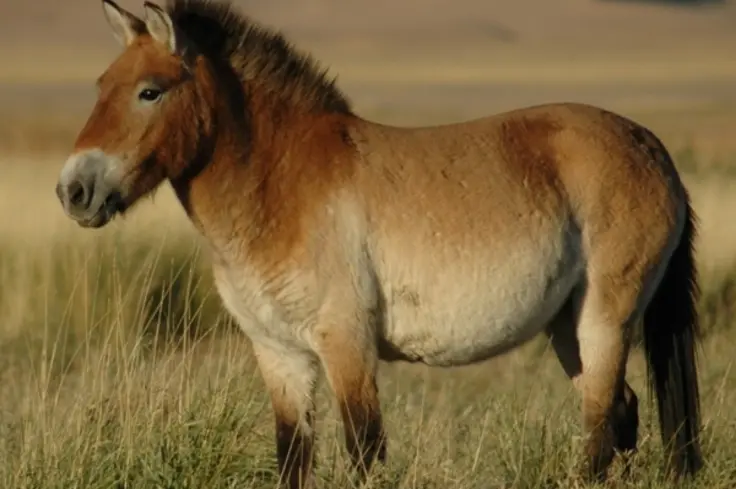
There was one breed that was considered to be wild until very recently however - Przewalski’s horse, as pictured here in Mongolia. They were thought to be the world's last remaining wild horses, but a genetic study revealed that they are actually a feral descendent of one of the earliest domesticated horse breeds, dating from 3500BC and hailing from the area we now call northern Kazakhstan.
For Sandra Olsen, a zooarchaeologist at the University of Kansas, the study's findings led to a fundamental rethink wild horses and their place in history: “The world lost truly wild horses perhaps hundreds, if not thousands of years ago, but we are only just now learning this fact, with the results of this research.” (source: reuters.com)