Donkey facts
All your donkey questions are answered here!
7 donkey facts
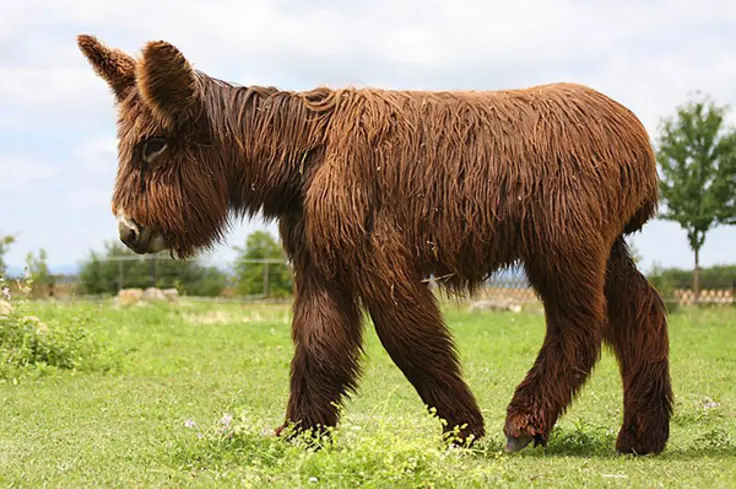
1. The world's most hairy donkey is called a Poitou!
This very shaggy breed of donkey has quite a history. They were bred in the French Poitou region in the 18th century, and were renowned for producing strong mules when paired with horses. Their distinctive long coat that hangs in thick, matted cords called cadenettes. Sadly as motorised vehicles took off in the 20th century they were no longer bred in such large numbers, and by 1977 there were only 44 individuals left. The good news is that thanks to the efforts of private breeders and conservation efforts they have recovered in mumbers, and at the last count there were 450 purebred Poitous.
2. Hee haw! Hee haw! How donkeys' braying makes them unique among equids
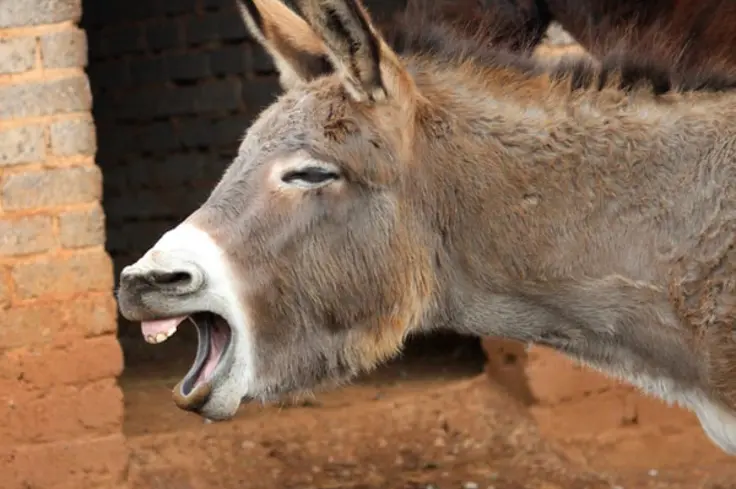
The characteristic 'hee haw' braying sounds that donkeys make can communicate a wide variety of feelings, from affection through to alarm.
It also makes them unique in that it requires an ability that donkeys have but horses and zebras lack: vocalising while both inhaling and exhaling. The hee occurs during air intake, and the haw comes during air outflow.
3. Donkeys' big ears can be traced back to their roots in the desert
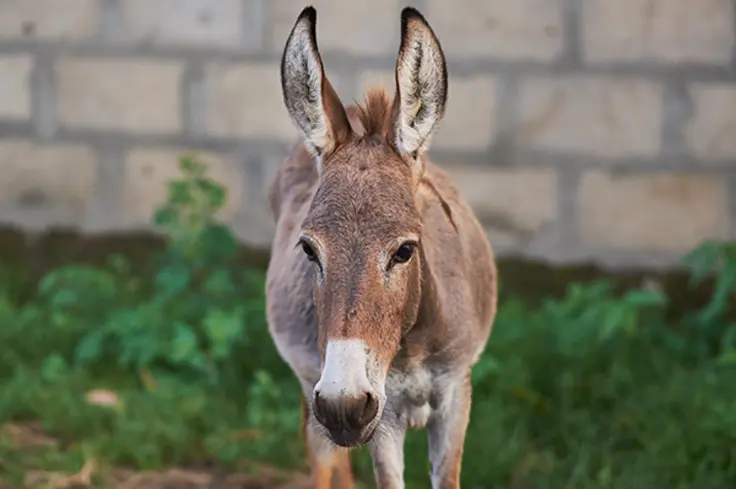
The ancestors of the modern donkey are the Nubian and Somalian subspecies of African wild ass, and their large ears can be traced back to this formative period spent as a desert animal and how they adpated to their environment over time. Unlike horses, which live in tight herds and stick together for safety, donkeys had to spread out to graze, as plant growth is sparse in the desert. So owning a pair of large ears became an advantage, allowing them to hear other members of the herd call from long distances. In addition to this their long ears help them to keep cool as blood flows near the skin through large veins in their ears.
Bonus fun fact - their ears have earned a place in the slang dictionary too, with 'donkeys years' meaning 'a long time'.
4. No laughing matter
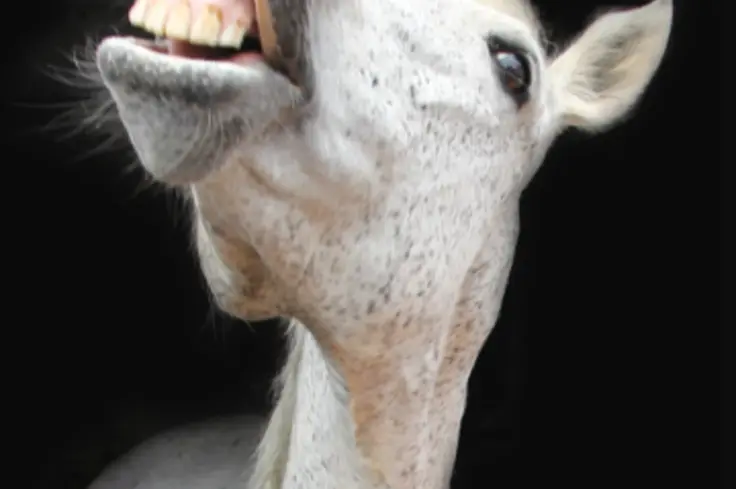
Just like the horse, when donkeys curl their upper lips and look like they’re laughing, they’re actually engaging in a special behaviour known as flehmen to determine whether a smell is good or bad.
Bonus fact: their teeth take up more space in their head than their brain does!
5. Pregnant donkey? Give her time
Donkeys do not reproduce very easily and need the environmental conditions to be just right to conceive and then to give birth.
For this reason donkeys can have a long gestation period of 11 to 14.5 months as they can 'wait' for more ideal conditions to give birth in.
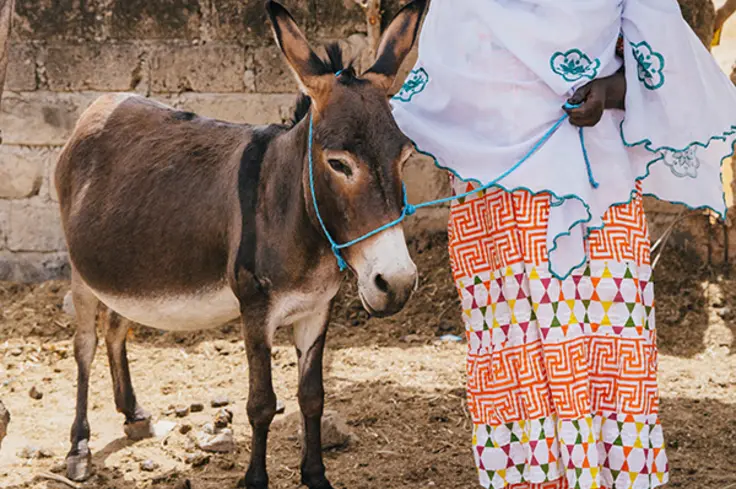
6. You'll never see a donkey throw up
Again like the horse, donkeys cannot vomit. The main reason they can't is due to the strength of their lower oesophageal sphincter - it means that the valve that usually allows food to go back the way it went in is so tight that it's almost impossible to open with internal stomach pressure.
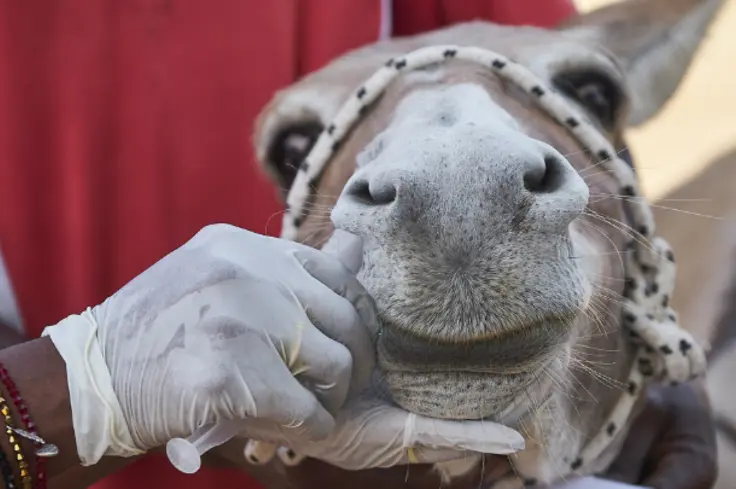
7. Donkeys stand their ground
Donkeys are less likely to flee a threatening situation than horses are – this may present as aggressive behaviour or the donkeys may appear ‘shut down’.
Just because a donkey is tolerating something, doesn’t mean they are enjoying it!
Characteristics of Donkeys
- Shortest, with thicker coats, shorter tails, very short necks and large ears.
- Their mane often sticks upwards.
- They often (though not always) have a lighter coloured muzzle area and dark skin around their eyes, like they have applied too much eye liner.
- Intelligent, strong and cautious.
- Able to carry up to twice their own body weight, so they are often used for manual labour.
- More independent than horses and harder to train.
- They often have a dorsal stripe - a dark stripe of fur along the middle of their back that splits and spreads down towards the tops of the legs.
Glossary
Jack: Male donkey
Jenny or jennet: Female donkey
