Brooke's approach to farriery (hoof care)
We view farriery as a vital part of improving the welfare of working horses, donkeys, and mules.
Brooke considers effective hoof care essential for the welfare and working ability of horses, donkeys, and mules - as hoof problems and lameness are among the most common welfare issues for these animals. Our approach focuses on strengthening sustainable, locally available farriery services, rather than providing short-term interventions.
How we work
How we improve hoof care
Brooke works to build the skills and professionalism of farriers through training, mentoring, and institutional partnerships, while also raising awareness among communities about the importance of good hoof care.
By supporting professional standards and creating demand for quality services, Brooke aims to ensure long-term improvements in the welfare of horses, donkeys and mules through improved farriery systems.
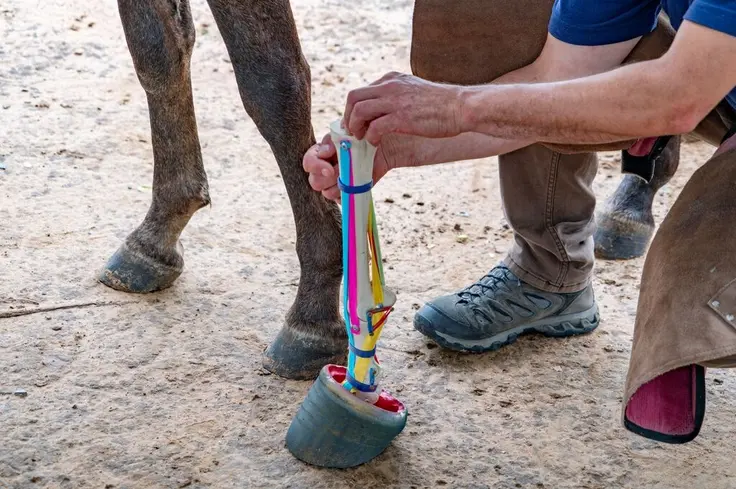
Five steps
Brooke's general approach to farriery
Key elements of Brooke’s approach to farriery include:
- Capacity building of local farriers
Brooke trains existing and new farriers to improve practical skills in hoof trimming and shoeing, while also promoting good welfare practices and a better understanding of horse, donkey and mule hoof health. - Mentoring and professional development
The organisation promotes mentoring systems where experienced trainers support farriers in developing technical competence and professional behaviour within their communities. - Professionalisation of the farriery trade
Brooke works to raise the status of farriery by supporting the development of training programmes, standards, and accreditation, with the long-term vision that farriery becomes a recognised and regulated profession. - Community engagement and demand creation
Brooke also educates equid owners about the importance of good hoof care and connects them with trained, trusted farriers to increase demand for quality services. - Partnerships with institutions and governments
The organisation collaborates with governments, training centres, and local partners to establish sustainable national training systems and improve farriery standards.

Learn more
Discover more about animal health and welfare
Interested in improving animal health and animal welfare? Explore more of our content on giving horses, donkeys and mules richer and more rewarding lives.