
27 October 2026
A heart-opening trip to Pakistan: The donkeys and people I will never forget
Klare Kennett - Head of Brand, Marketing and Communications at Brooke - shares the stories of the people and animals she met on a recent trip to Pakistan.
After returning from a trip to Pakistan earlier this month, I sit writing this blog at home with my rescue dogs Basil and Monty curled up on the bed behind me and reflecting on how lucky I am to have control of my environment and how any support and help I may need for them is always within easy reach.
Care and compassion for animals is innate for many of us, no matter where we exist on this planet, but our ability to do the best we can to alleviate the suffering of other beings is often down to the roulette of where we may be born into this world, the opportunities we have and the environment we live in.
I’ve been home in the UK now for a couple of weeks, but my mind keeps returning to one image: a donkey emerging wearily from a dark coal mine, weighed down with bags of coal. His owner unloaded them, struggling with just one arm following a mine accident several years ago. Then they went back down again and again. They would stay at the mines several hours longer than the other workers without the same physical restriction– their lives intertwined and each at the mercy of one another’s health and the impact of the unforgiving environment.
In my photograph, you only see a moment. Standing there, I understood that this must not be seen as a snapshot, but an everyday reality. I was visiting and could return to a very different existence. They could not.
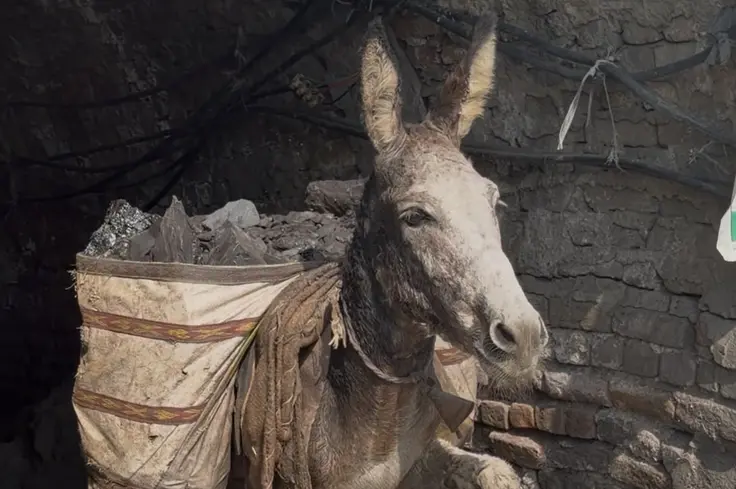
Bound together by work and survival
That distinction has stayed with me. So have the noise, the smell, the heat, and the relentless harshness of the environment. The donkeys and people are never two separate stories. Their lives are bound together by work and survival.
Families depend on these animals. A donkey is more than a means of earning a living. Their physical and mental welfare matters just as much in its own right. Our founder, Dorothy Brooke, knew that 100 years ago as acutely as we do today. Understanding that dependence must never mean accepting suffering as inevitable, and that is why the work of Brooke is as challenging as it is of vital importance. In each country we work in, and in each different environment –be that the coal mines, brick kilns or our fight to end the donkey skin trade we have to adapt our support with the deepest understanding and respect for the communities and their challenges: environmentally, politically and sociologically.
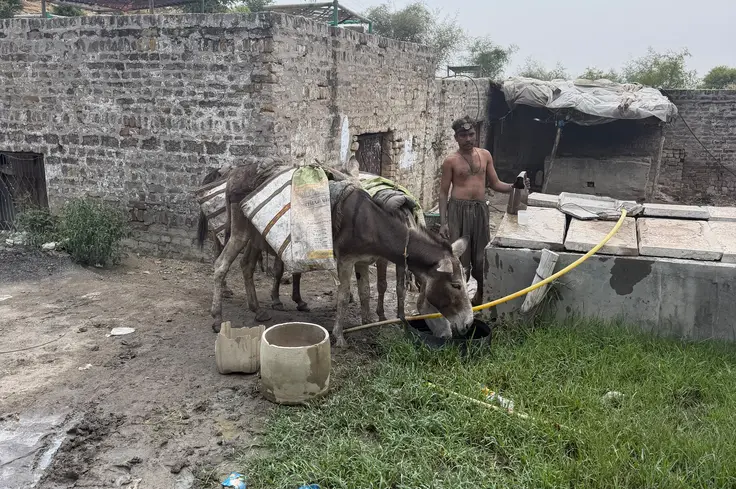
Unbridled kindness and warmth from generous communities
Hardship was not all I encountered. Communities welcomed us with rose petals. Children took my hands, chattering excitedly. I met families making a living by searching through rubbish, the same rubbish I saw a donkey searching through for food. Yet they welcomed us into their lives with extraordinary generosity and joy.
The warmth mattered. But it did not make the hardship any less stark. One does not cancel out the other.
I also saw why care needs practical support. Poor animal welfare does not automatically mean an owner does not care. Knowledge, expertise and sustained support can help people turn that care into better lives for their animals, and this is what Brooke does. I watched our Pakistan CEO, Dr Javed Gondal, help numerous donkey owners with their injured animals, giving them the vet care they needed immediately, then engaging warmly with their owners, ensuring that they learnt the lessons they needed to ensure that their animals didn’t need to suffer again – and encouraging them to pass their learning onto their friends. His kindness and humanity with these owners was an inspiration.
We visited communities where Brooke’s work was beginning, others where it was established, and places where we had finished our work and the communities were ready to take over. Differences in welfare and animal care were visible - healthier, happier donkeys - and owners. Improvements were continuing long after Brooke’s work had been completed. The lasting legacy was clear.
The difference must be a change to individual daily lives
That is what lasting change means: not only as a result in a report with figures that can never truly show the real impact; change must be a difference in an animal’s daily life, for their mental and physical wellbeing.
I went to Pakistan to understand Brooke’s work more deeply. I came home unable to keep it at a distance.
As someone whose job it is to tell these stories, I feel a responsibility not to soften what I saw or reduce people to the background of an animal’s suffering. We need to tell the whole story: the hardship, the relationships and the changes already happening.
I will never forget that donkey returning to the mine. Nor do I want to. Remembering him means remembering why better welfare cannot wait and why I chose to work for Brooke and why what we do truly can change lives, and if that takes years, then, with your support, we will remain helping for as long as that takes
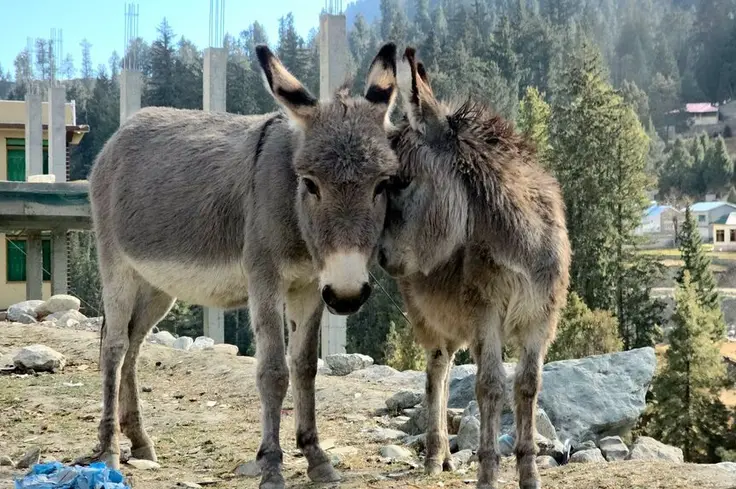
I went to Pakistan to understand Brooke’s work more deeply. I came home unable to keep it at a distance.