
1 October 2026
Deborah Meaden, Joanna Lumley and Chris Packham call for Amazon UK to ban cruel donkey-skin products
Annette Badland, Rory Bremner, Anthea Turner, Jodie Prenger, Jenny Seagrove and Dr Scott Miller join public demand for retail giant to stop selling ejiao and fuelling illegal donkey skin trade.
TV presenter Chris Packham, Dragon’s Den entrepreneur Deborah Meaden, comedian Rory Bremner and actors Joanna Lumley, Annette Badland, Jodie Prenger and Jenny Seagrove are among high-profile supporters backing a 60,000-strong petition of UK people calling on Amazon UK to remove, and stop future sales, of products containing ejiao, a gelatine made from boiling donkey skins, from its marketplace.
The celebrities, broadcasters, veterinary professionals, academics and animal welfare advocates have signed an open letter to John Boumphrey, Amazon’s UK and Ireland Country Manager, supporting international working animal charity Brooke’s petition and its campaign to end the donkey skin trade.
Brooke has written to Amazon UK on multiple occasions, presenting evidence of the harrowing global trade and requesting a meeting to demonstrate their concerns. Amazon has not replied.
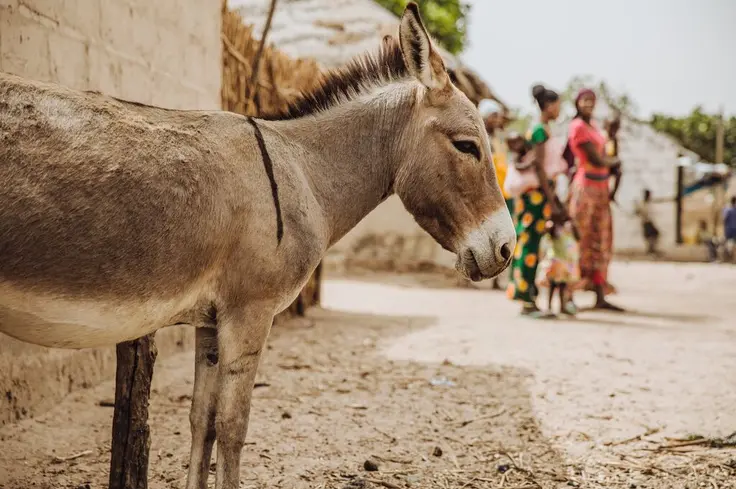
“This trade, which most people are shocked to learn even exists, causes immense suffering for both animals and people. Products sold in the UK cause donkeys to be stolen in the night and bludgeoned to death for their skins right outside their home. Others are forced to endure a gruelling journey over miles designed to exhaust them so they can be brutally struck down in the most horrifying ways for a simple ingredient or a facial serum.”
Six million donkeys killed for collagen
More than six million donkeys are killed for their skins each year to meet global demand for ejiao, an ingredient used in supplements, foods, drinks, traditional medicines and cosmetics. The charity’s research found that, although Amazon UK does not sell the products directly, listings remain available from third-party sellers on its marketplace.
Demand for ejiao is currently driven by China, primarily for traditional medicines and collagen-wellness products with unproven benefits. As African donkey populations are depleted by the trade, industry is expanding to source donkeys from countries like Pakistan.
In their letter, the high-profile signatories urge Amazon UK to acknowledge Brooke and the UK public’s concerns, remove existing ejiao listings and introduce a clear policy prohibiting future sales of products made from or containing ejiao, stating:
“Amazon has the scale and influence to help stop a trade linked to immense animal suffering and devastating harm to communities. If one of the world’s most recognisable retailers acts, it will send a clear message that cruelty has no place in modern commerce.”
Women, children and communities devastated
Donkeys are essential to millions of people globally, helping families transport water and goods, farm, travel to markets and secure a child’s education. Women often fare the worst when a donkey is stolen, as they then often take over their role in water collection and livestock work.
Brooke presented the petition at Amazon UK Headquarters on 22 September 2026.
“Brooke’s evidence shows the demand fuels illegal criminal activity, with animals trafficked across borders, transported for long periods and killed in illicit slaughterhouses. When a donkey is stolen, entire families lose their income and lifeline overnight. This must change, and as one of the largest consumer platforms, with immense influence, Amazon can take a meaningful stand and ensure its platforms aren’t accelerating this cruelty.”
The open letter also raises questions about the availability of products made from animal-derived gelatine to UK consumers and calls for scrutiny of the rules governing products of animal origin imported into Great Britain.
'I've seen first hand the devastating impact the donkey skin trade has on not only donkeys, but on communities and I was shocked to learn ejiao products are easily available right here in the UK.”
The full open letter and list of signatories
John Boumphrey
Vice President and UK & Ireland Country Manager
Amazon UK Services Ltd
1 Principal Place
Worship Street
London
EC2A 2FA
22nd September 2026
Dear John Boumphrey,
We write as public figures and animal welfare advocates in support of Brooke’s campaign to end the cruel donkey skin trade. Together, we ask Amazon UK to publicly acknowledge the concerns raised by 60,000 members of the UK public through Brooke’s petition and to commit to removing and prohibiting the sale of ejiao products on Amazon Marketplace UK.
As Brooke has approached you about several times, ejiao is a gelatine made by boiling donkey skins and is used in some supplements, foods and cosmetic products. Its production is fuelling a global trade that causes immense animal suffering and devastating harm to communities that depend on donkeys for transport, access to water, education, farming and income.
Across parts of Africa, Asia and beyond, donkeys are being stolen, transported in appalling conditions and brutally slaughtered for their skins. When a donkey is taken, a family can lose far more than an animal: they may lose their means of earning a living, carrying goods, reaching markets, accessing essential services and keeping children in school. This is a hidden trade, but its consequences are painfully visible for the people and animals affected by it.
It is noted that, while Amazon UK does not sell these products directly, ejiao products remain available through third-party sellers on Amazon Marketplace UK. Given Amazon’s scale, reach and influence, this presents both a serious responsibility and a powerful opportunity: to show leadership by ensuring that its marketplace does not help sustain a trade linked to animal cruelty, community harm and wider concerns around biosecurity and disease transmission.
We also echo Brooke’s concerns arising from its recent scoping work, including correspondence with the Food Standards Agency. This work raises serious questions about the continued availability of ejiao products to UK consumers through third-party sellers, particularly where products made from or containing donkey-derived gelatine may fall within rules governing products of animal origin and their import into Great Britain.
The British public is rightly known for its concern for animal welfare. The people who have signed Brooke’s petition are asking Amazon UK to listen and to act. Other platforms have already taken steps to remove ejiao products from sale. If one of the world’s most recognisable retailers were to do the same, it would send a clear and important message that cruelty has no place in modern commerce.
We therefore urge Amazon UK to publicly acknowledge the petition and the concerns it represents; remove ejiao products currently available on Amazon Marketplace UK; and introduce a clear policy prohibiting future listings of products made from or containing ejiao.
This is a chance for Amazon UK to demonstrate compassion, responsibility and leadership. By acting now, Amazon can help stop horrifying cruelty, reduce demand for ejiao, protect donkeys and support the vulnerable communities that rely on them every day.
We hope Amazon UK will respond constructively and urgently.
Yours sincerely,
- Chris Packham
- Annette Badland
- Deborah Meaden
- Flavia Cacace-Mistry
- Anthea Turner
- Jodie Prenger
- Dr Scott Miller BVSc MRCVS
- Rory Bremner
- Jenny Seagrove
- Aly Vance
- Dr Emma Milne BVSc FRCVS
- Dr Julian Norton BVSc FRCVS
- Danny Chambers MP
- Esme Higgs
- David Higgs
- Sam Dracott
- Gemma Stevens
- Prof. Delia Grace Randolph (Professor Food Safety Systems, Natural Resources Institute)
- Prof. Jonathan Rushton (Professor of Economics of Animal Health at the Roslin Institute, University of Edinburgh)
- Dr Anthony J Booker, MSc PhD MRSC FLS (Honorary Lecturer, UCL School of Pharmacy)
- Honorary Professor Robyn Alders (Development Policy Centre, Crawford School of Public Policy, Australian National University; Adjunct Professor, Dept. of Infectious Disease & Global Health, Cummings School of Veterinary Medicine at Tufts University)
- Prof. Ilan Kelman (Professor of Disasters and Health, University College London)