Data on working animals
We need reliable data on donkey, horse and mule populations to make impactful policy decisions. Our research highlights data challenges and recommendations for governments
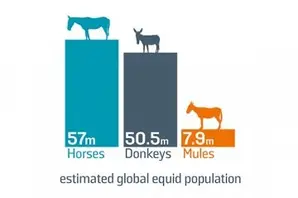
There are an estimated 116 million equines (donkeys, horses and mules) globally, with 36 million in the 38 lowest-income countries, but accurate population data for working animals is lacking for many countries.
This gap means that governments and organisations can’t spot worrying trends and threats to animal populations, such as illegal trades and diseases.
Why we need accurate animal data
Policy makers need reliable data to make informed decisions to better support working animals’ welfare and their communities’ livelihoods.
Data is also essential for disease surveillance and research, as well as responding to wider threats like climate change, water access and food insecurity.
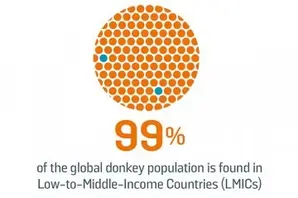
99% of the global donkey population is found in low-to-middle income countries
Working animals are not prioritised in programming and policy making. There is minimal funding for much-needed research to inform evidence-based policy and promote sustainable development.
Our research on animal census reporting
Our research report explores 36 countries’ most recent censuses to highlight challenges for governments and provide recommendations. It includes case studies on China, Ethiopia, India, Kenya, Mexico, Senegal and the UK.
36 countries’ last censuses
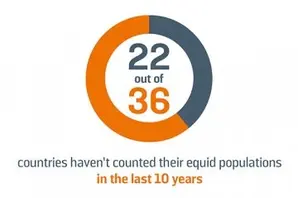
22 out of 36 countries haven’t counted their equid populations in the last 10 years.
Livestock data challenges
Countries are supposed to report livestock data to the UN Food and Agriculture Organisation every 10 years. Our research examined 36 countries to determine how recently governments carried out a census. We found that:
- Only 14 countries have conducted a census since 2011
- Eleven countries in the past 11 to 15 years
- Four countries in the past 16 to 20 years
- Four countries over 20 years ago
- Two countries have no census history.
Download our report on working animal data
Learn about Brooke
Discover how we transform the lives of working horses, donkeys and mules.

What we do
Brooke works with communities across the world to transform the lives of working horses, donkeys and mules. We drive lasting improvements in animal health and welfare through action, advocacy and education.